1 Tidy up the room
This lesson is the extension of previous lesson regarding your room and what you have
in your room. Instead of simple statement of what you have in the room, you can also
describe where do you have the things in your room by using simple position words.
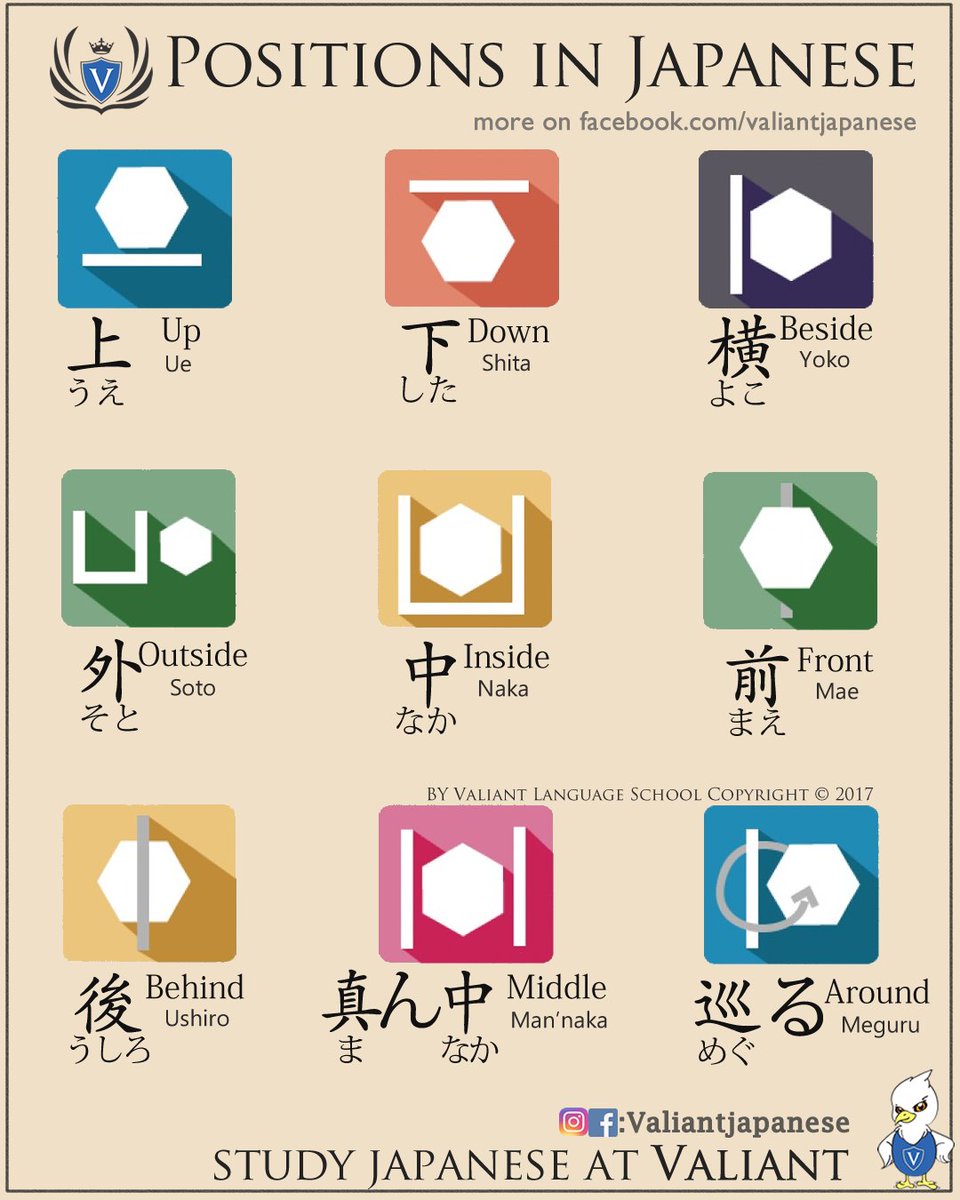
うえ[ue]
なか[naka]
した[shita]
よこ[yoko]
The position words are commonly used together with a noun and particle [に] as a connector for places.
1. にんぎょうは はこの なかに あります。[ningyoo wa hako no naka ni arimasu]
2. ねこは ドアの よこに います。[neko wa doa no yoko ni imasu]
The phrase also can be used with [おねがいします] to ask a favor from someone to put things.
エザ:せんせい、しゃしんは どこですか。
せんせい:たなの うえに おねがいします。
1. トイレは どこですか。
2. いえは どこですか。
3. ほんは どこですか。
2 Visiting a Japanese home
There are few fixed phrases in Japanese language when we visit a friend’s or new places. You can refer to the expressions that are commonly used in the textbook. In Japan, the custom is very much similar with Malaysian houses. They took off the shoes at the main door and replace with an in-house slipper to walk around the house. The main door is called genkan [げんかん]. This where you take off your shoes and put them in properly facing the door.
げんかん[genkan]
Many Japanese houses still use Japanese style room. Sometimes the Japanese style room also used as guest room. The Japanese style room usually will be covered with tatami matt.
わしつ[washitsu]・たたみ[tatami]


No comments:
Post a Comment